

An inspection report lands in your inbox with one word at the top: PASS. The factory wants the balance today, the container is booked for Friday, and the report says “AQL 2.5 / 4.0”. Does that mean your 3,000 units are fine?
It means something narrower than most buyers assume. An inspector checked a random sample, counted the defects and compared them with limits you agreed. Understanding those limits is the difference between an inspection that protects you and one that only produces paperwork.
What AQL actually means
AQL stands for acceptance quality limit. It comes from the international standard for sampling inspection, ISO 2859-1, which the inspection industry has used for decades.
Checking every unit in a large order is slow and expensive, so an inspector checks a random sample instead. The standard tells you:
- how many units to sample, based on your order quantity and an inspection level;
- how many defective units the sample may contain before the order fails, based on the AQL you choose.
A lower AQL is stricter. AQL 1.5 allows fewer defects in the sample than AQL 4.0.
The limit applies to the sample, not the whole order. A pass means the sample was within your limits. It doesn’t promise that every unit in the order is perfect.
Find your sample size
Enter your order quantity. The calculator applies the standard’s tables for single sampling at normal inspection.
| Defect class | Inspect | Accept up to | Reject at |
|---|---|---|---|
| Critical Zero tolerance | 125 | 0 | 1 |
| Major AQL 2.5 | 125 | 7 | 8 |
| Minor AQL 4.0 | 125 | 10 | 11 |
Single sampling, normal inspection, using the ISO 2859-1 tables the inspection industry works to (the same as ANSI/ASQ Z1.4). ISO revised the standard in January 2026; if your contract names an edition, check against it. Zero tolerance for critical defects is common practice rather than a value from the standard. Where the major and minor sample sizes differ, inspectors usually draw the larger sample and judge each class against its own limits.
Three things the numbers show:
- The order size sets the sample. 500 units means 50 inspected; 3,000 means 125; 10,000 means 200. The sample grows much more slowly than the order.
- The AQL sets the limits. For 3,000 units at Level II, the order fails at 8 units with major defects (AQL 2.5) or at 11 with minor defects (AQL 4.0).
- The inspection level is a dial. Level II is the default. Use Level III for a first order with a new factory or after a failed inspection, and Level I when a supplier has a long record of passing.
The standard also has four “special” levels (S1 to S4) with much smaller samples. Inspectors use them for tests that take time or destroy the product, such as a carton drop test or a full function test.
Critical, major and minor defects
Every defect the inspector finds goes into one of three classes, and each class has its own limit.
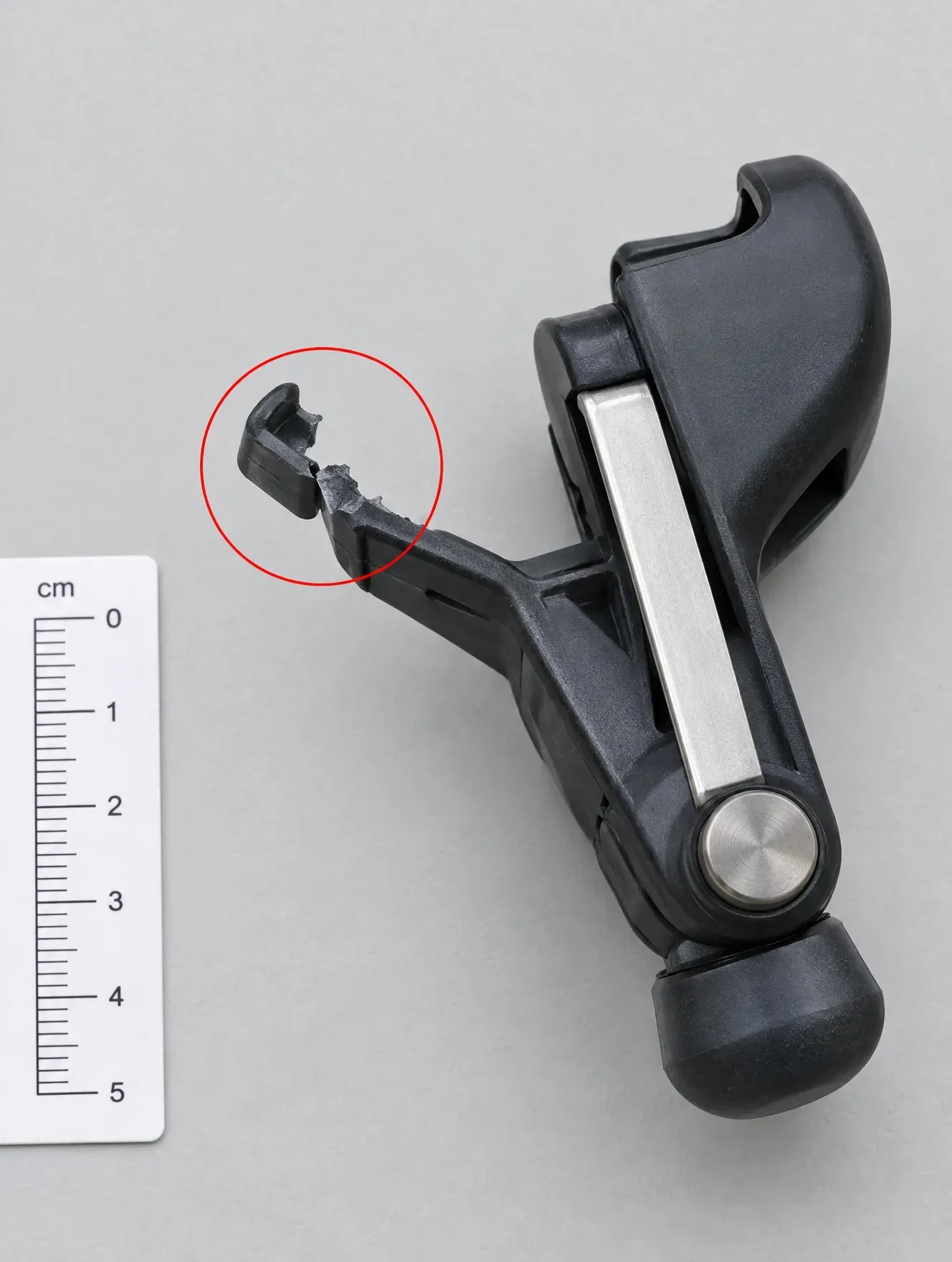
Major: the part is broken
The clip no longer holds. A customer would return it.
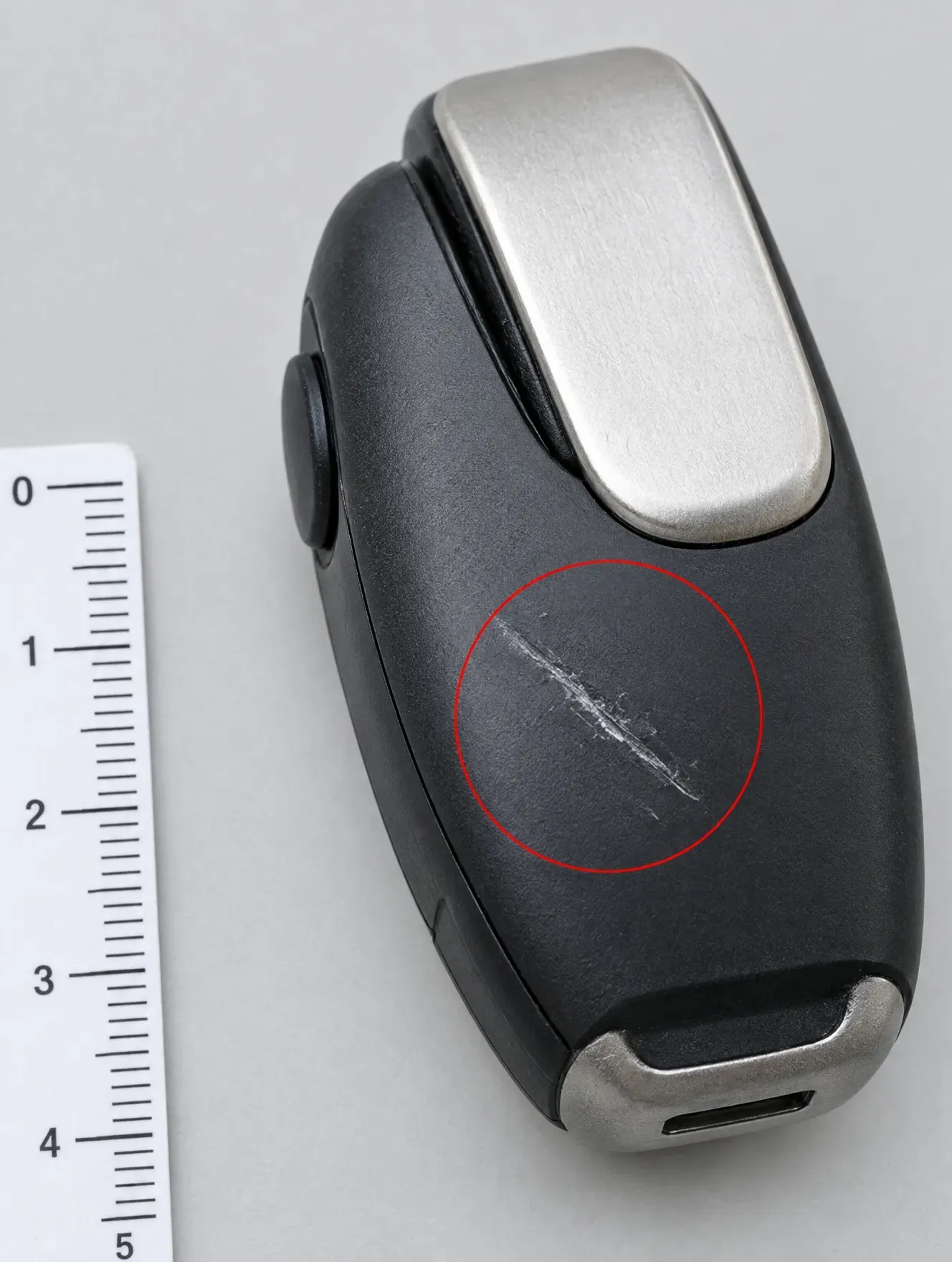
Major or minor: a visible scratch
On the main face and visible at arm's length, most defect lists call this major.
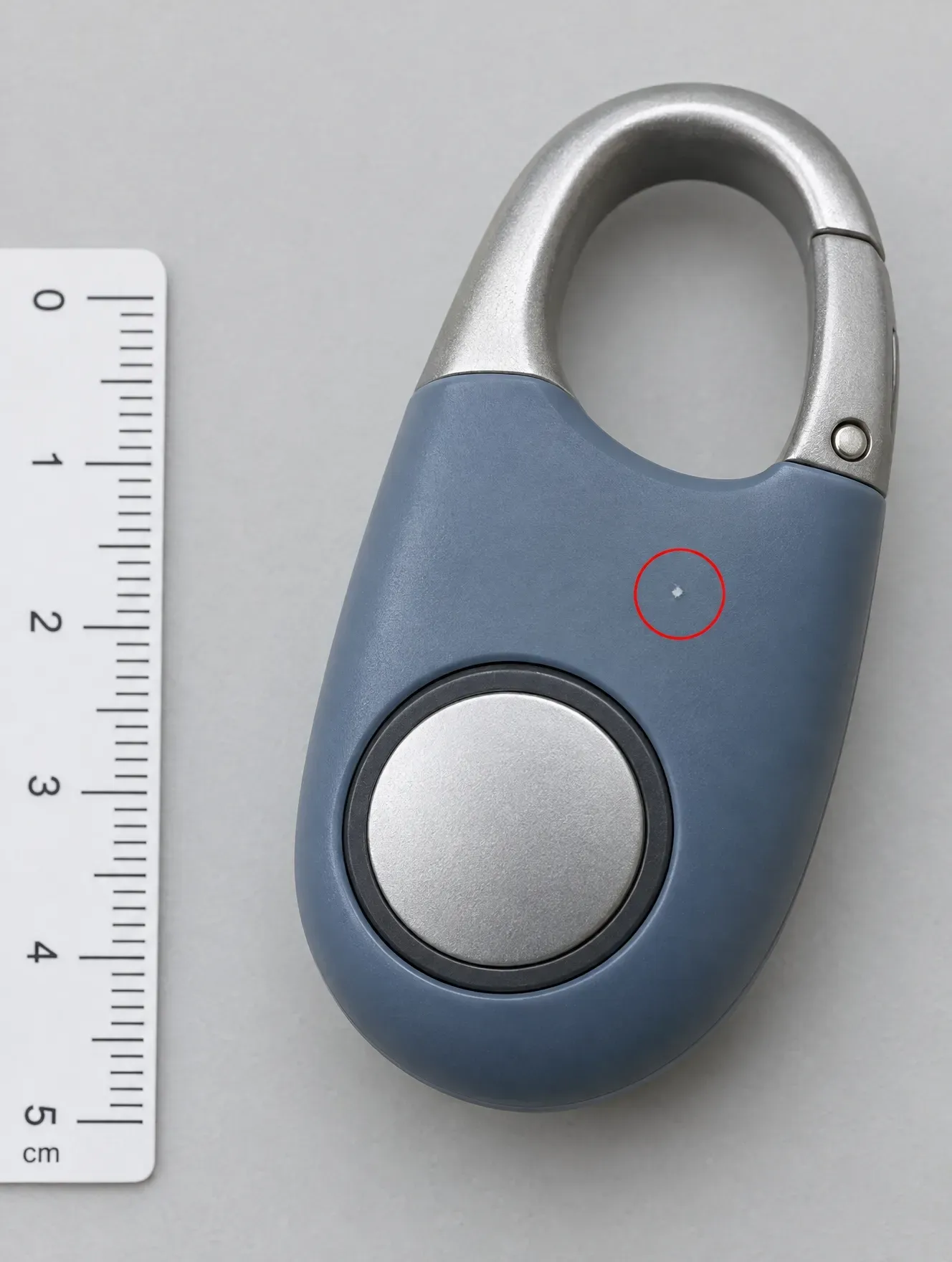
Minor: a small cosmetic mark
Hard to see in normal use and doesn't affect function.
- Critical: the product could hurt someone or breaks the law. Sharp edges, exposed wiring, small parts that detach from a children’s product, a missing safety warning. Most importers accept zero.
- Major: the product doesn’t work as it should, or a customer would return it. Broken parts, wrong colour, wrong size, failed function test. AQL 2.5 is the usual limit.
- Minor: a small flaw that doesn’t affect use and most customers wouldn’t notice. Loose threads, small marks, slight print shift. AQL 4.0 is the usual limit.
The line between major and minor is where most arguments happen. Settle it before production with a defect list for your product: what counts as each class, with photos where you can. Give it to the factory and the inspector, so everyone judges the same way.
Typical AQL limits by product
| Product type | Critical | Major | Minor |
|---|---|---|---|
| Most consumer goods | 0 | 2.5 | 4.0 |
| Children’s products, toys, electrical goods | 0 | 1.5 | 2.5 |
| High-value or premium branded goods | 0 | 1.5 | 2.5 |
| Low-value promotional items | 0 | 4.0 | 6.5 |
Common choices across the inspection industry, not legal requirements. Set yours by the cost of a return and the risk to the customer.
What a pre-shipment inspection checks
The defect count is one part of a pre-shipment inspection. A full one also checks:
- Quantity: finished units and packed cartons against the order.
- Packing and labelling: carton marks, barcodes, retail packaging, your importer details and any warnings.
- Workmanship: the defect count against your AQL limits.
- Measurements and weight against the specification.
- Function tests: does it switch on, open, close, fit?
- On-site tests suited to the product, such as a carton drop test, a barcode scan or a colour-fastness rub test.
The inspection happens when production is finished and at least 80% of the goods are packed. The inspector picks cartons at random from the stack, not the ones the factory brings to the table.
What to do when an order fails
A failed inspection gives you leverage, as long as you haven’t paid the balance. Your options:
- Rework and re-inspect. The factory sorts and repairs the goods, then a second inspection checks them. Write into the contract that the factory pays for re-inspection after a fail.
- Sort 100%. The factory checks every unit and removes the defective ones, then you re-inspect.
- Accept with a discount, if the defects are minor and the deadline matters more.
- Reject the order. The last resort, and only realistic if your contract and payment terms support it.
Whatever you choose, get the factory’s corrective action in writing, so the next order doesn’t repeat the problem.
Mistakes that make inspections useless
- No defect list. The inspector then judges with general guidelines, not your standard.
- Inspecting too early. If most goods aren’t packed, the inspector can’t check packing or draw random cartons.
- Letting the factory choose the cartons. The sample must be random.
- Paying the balance first. After that, a failed report is a complaint, not leverage.
- Treating a pass as perfection. Plan for a small number of defective units reaching you, and budget for them.
The bottom line
Choose your limits before production: zero critical defects, AQL 2.5 for major and AQL 4.0 for minor suit most consumer goods. Write a defect list against your golden sample. Book the inspection when production is finished and most goods are packed, insist on random cartons, and keep the balance until the report passes. Use the calculator above to check the sample size on any report you receive.
Our quality inspection team in China inspects to your limits and sends the report with photos. Send us your order details to book one.
Questions we get asked
What does AQL 2.5 mean?
It is the acceptance quality limit used for major defects on most consumer goods. In practice it sets the maximum number of defective units allowed in the sample. For an order of 3,000 units inspected at General Level II, the inspector checks 125 units, and the order passes on 7 or fewer units with major defects and fails on 8.
How many units should be inspected?
It depends on the order quantity and the inspection level. At General Level II, which is the default, an order of 500 units needs 50 inspected, 3,000 units needs 125, and 10,000 units needs 200. Use the calculator in this guide for your exact quantity.
Does passing AQL mean there are no defects?
No. A pass means the defects found in the sample were within the limit you agreed. Some defective units can still be in the order. If you need every unit checked, ask for 100% inspection instead, which costs more and takes longer.
Who pays for a re-inspection?
Agree it in the purchase contract before production. A common term is that the factory pays for the re-inspection if the first one fails. Without that clause, you usually pay twice.
When should a pre-shipment inspection happen?
When production is finished and at least 80% of the goods are packed in their export cartons. That lets the inspector draw random cartons, check packing and labelling, and still leaves time to fix problems before the ship date.