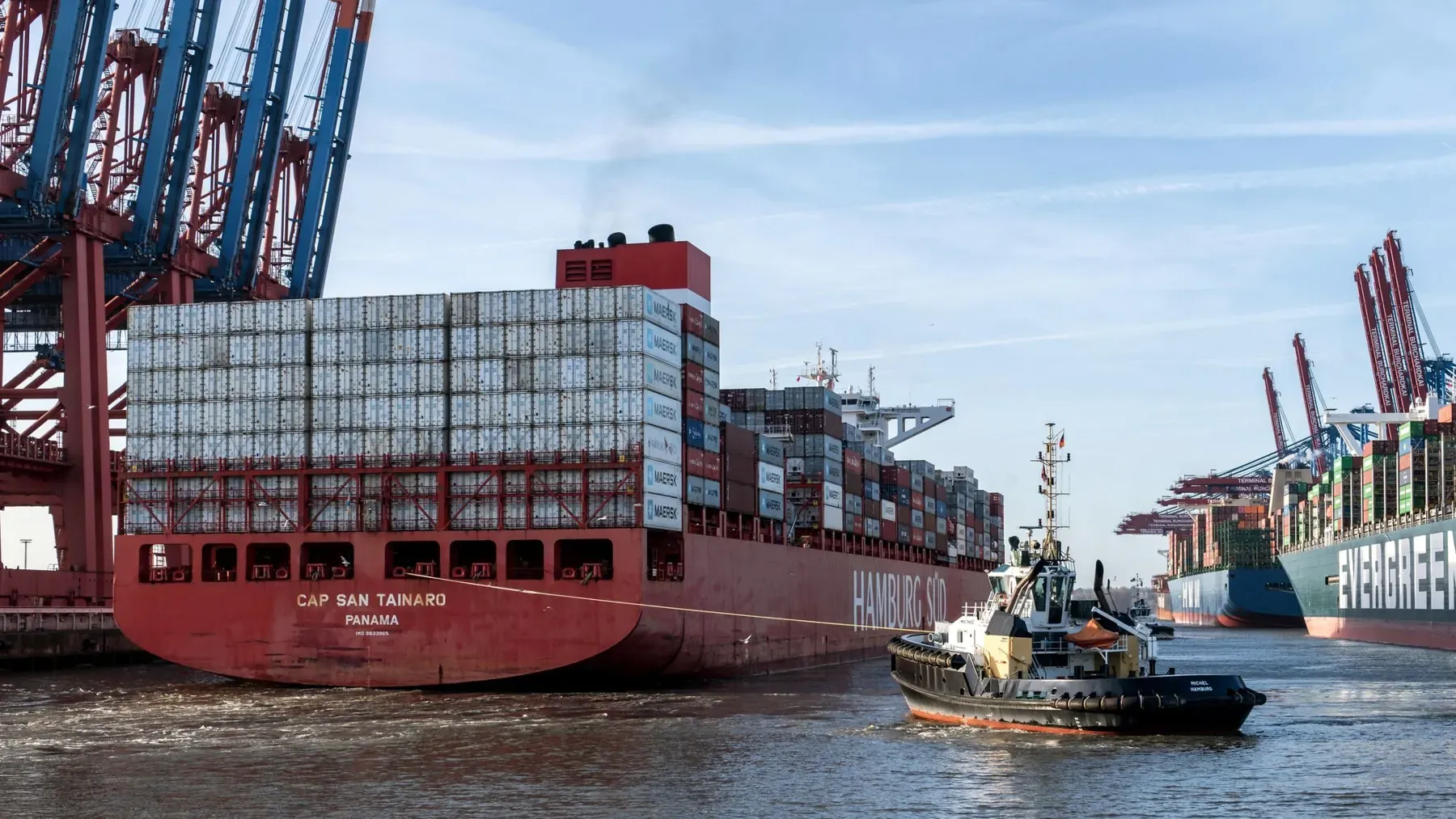

The EU is one customs territory with one tariff, so a T-shirt from China pays the same duty in Dublin as in Hamburg. That is where the simplicity ends. VAT rates, VAT payment rules, packaging registration and labelling languages differ by country, and since 1 July 2026 the rules for low-value parcels have changed.
This guide covers what is the same across the EU and what changes by country, with the four markets most of our clients sell into: Ireland, Germany, the Netherlands and France.
The import process at a glance
- Get an EU EORI number
From your own country's customs, or the first EU country you import into if you are based outside the EU.
- Find the duty rate in TARIC
One EU tariff. Rates and any anti-dumping duty on Chinese goods are listed by commodity code.
- Check the product rules
CE marking where it applies, GPSR, an EU responsible person, local-language labels.
- Register for VAT and packaging EPR
In each country where you hold stock or sell above the thresholds.
- Ship and clear customs
A customs broker files the import declaration in the country of import.
- Pay duty and import VAT
Duty at clearance; import VAT at the border or on your VAT return, depending on the country.
Step 1: Get an EU EORI number
An EORI number identifies your business to EU customs. It is free.
- EU-based businesses apply to the customs authority in their own country, for example Revenue in Ireland.
- Businesses outside the EU, including UK companies, register in the first EU country where they lodge a customs declaration.
One EORI number works across all EU countries. A UK company selling into the EU needs an EU EORI as well as its GB one.
Step 2: Find the duty rate
The EU applies one Common Customs Tariff to imports from outside the EU. Look up your commodity code in TARIC, the Commission’s tariff database, and select China as the origin. It shows:
- the third-country duty, which applies to Chinese goods;
- any anti-dumping or countervailing duty on Chinese products, which can be far higher than normal duty;
- import controls, such as licences or certificates.
Most consumer goods pay between 0% and 12%; clothing is typically 12%. Duty is charged on the customs value: the price of the goods plus freight and insurance up to the point they enter the EU.
Step 3: Check the product rules
As the importer, your business carries legal responsibility for the product in the EU, whatever your Chinese factory says.
- CE marking applies to products covered by EU harmonised rules: toys, electrical goods, radio equipment, machinery, personal protective equipment and more. It needs testing, a technical file and an EU declaration of conformity.
- The General Product Safety Regulation (GPSR) has applied since 13 December 2024 to consumer products sold in the EU, including online. Products must carry the manufacturer’s details, a type or batch number, and warnings in the language of each country where you sell.
- An EU responsible person. Most consumer products need an economic operator established in the EU, such as the importer or an authorised representative, named on the product or packaging. A Chinese factory or a UK company can’t fill this role. Our authorised representative service can.
Fix these in the artwork before production. Relabelling stock in an EU warehouse costs far more than printing it right.
Step 4: Register for VAT and packaging
VAT. If you hold stock in an EU country, for example in a 3PL or Amazon warehouse, you normally need a VAT registration there. Selling to consumers across borders from that stock can bring further registrations or the EU’s One-Stop Shop. Our VAT registration service handles registrations and returns.
Packaging and product EPR. Most EU countries require producers to register for extended producer responsibility and report the packaging, electrical goods and batteries they put on the market. Germany’s packaging register (LUCID) is the best known, and marketplaces check registration numbers before listing. See our EPR compliance service.
Step 5: Ship and clear customs
| Mode | Typical time, China to the EU | Best for |
|---|---|---|
| Sea freight | About 30 to 45 days to Rotterdam, Antwerp or Hamburg | Most stock orders |
| Rail | About 18 to 25 days to hubs such as Duisburg or Małaszewicze | Mid-sized orders that need to beat sea freight |
| Air freight | About 5 to 10 days door to door | Urgent or high-value goods |
| Express courier | About 3 to 7 days | Samples and small orders |
Market ranges in October 2026. Since mid-2026 several carriers have moved services back through the Suez Canal, while others still sail round the Cape of Good Hope. Check the routing when you book.
A customs broker files the import declaration in the country where the goods are released. Your goods can arrive at Rotterdam and be cleared there for sale in Germany; where they are released for free circulation affects where import VAT falls due.
Step 6: Pay duty and import VAT
Import VAT is charged at the rate of the EU country where the goods are released, on the customs value plus duty plus delivery costs to the first destination.
| Country | Standard VAT rate | Paying import VAT |
|---|---|---|
| Ireland | 23% | Postponed accounting on the VAT return for VAT-registered importers |
| Germany | 19% | Paid at import (deferment possible), then reclaimed as input VAT |
| Netherlands | 21% | Reverse charge on the VAT return with an Article 23 licence |
| France | 20% | Self-accounted on the VAT return (autoliquidation) for VAT-registered importers |
Rules on postponing VAT change, and the details depend on your registration. Confirm them with your VAT adviser before your first import.
Worked example: Ireland
1,000 cotton T-shirts at €4.00 each FOB Shenzhen, shipped by sea and delivered to a 3PL in Dublin.
| T-shirts, FOB Shenzhen | €4,000 |
|---|---|
| Sea freight and insurance to the EU borderIllustrative | €500 |
| Import duty at 12%12% of the €4,500 customs value | €540 |
| Port charges and delivery to DublinIllustrative | €300 |
| Import VAT at 23%23% of €5,340 | €1,228.20 |
| Total cost, before reclaiming VAT | €6,568.20 |
Freight and local costs are illustrative. A VAT-registered Irish business accounts for the €1,228.20 VAT on its return, so its landed cost is €5,340, or €5.34 a shirt.

Low-value parcels: what changed in July 2026
If you send parcels direct from China to EU consumers, the rules changed on 1 July 2026:
- The old €150 customs duty exemption has gone.
- A temporary flat duty of €3 per item now applies to parcels worth up to €150. It is charged per item type by tariff classification, not per unit: five T-shirts pay €3, three T-shirts and a watch pay €6.
- Import VAT still applies to every import, whatever its value. For consumer sales up to €150, sellers usually collect it at checkout through the Import One-Stop Shop (IOSS).
- The €3 duty is planned to run until the EU customs data hub replaces it, expected from 2028. An EU handling fee per parcel is also planned but not yet confirmed, and some countries have introduced national fees of their own.
For brands with real volume, the change makes bulk import into an EU warehouse more attractive than single parcels from China.
Shipping to Ireland: one extra thing
Ireland is in the EU but most freight from China used to reach it through Great Britain. Since Brexit, goods crossing Great Britain on the way to Ireland pass through two customs borders unless they move under transit, which needs the right paperwork from the start. Direct sailings to Dublin or Cork, or routing through Rotterdam, avoid the issue. Tell your forwarder the final destination before booking. Our page for Irish importers covers the route, VAT and EORI in more detail.
The bottom line
Get an EU EORI, find your code in TARIC and check for anti-dumping duty on Chinese goods. Sort CE marking, GPSR labelling and an EU responsible person before production, and register for VAT and packaging EPR where you hold stock. Ship bulk into an EU warehouse where you can, use your country’s VAT deferral if it has one, and work out the landed cost again if you sell parcels direct from China after the July 2026 changes.
Our team in China handles sourcing, inspection and shipping into the EU, and our specialist compliance partner covers VAT, EPR and the EU representative role. Send us a brief to get started.
Questions we get asked
Do I need an EORI number to import into the EU?
Yes. An EU business gets an EORI number from the customs authority of its own country. A business based outside the EU registers in the first EU country where it lodges a customs declaration. One EORI works across the whole EU.
What is the €3 customs duty?
Since 1 July 2026 the EU has charged a temporary flat duty of €3 per item on low-value parcels worth up to €150, replacing the old duty exemption. It is charged per item type by tariff classification, not per unit, so five T-shirts pay €3 and three T-shirts and a watch pay €6. It is planned to last until the EU customs data hub replaces it, expected from 2028.
How much VAT do I pay on imports from China?
Import VAT is charged at the standard rate of the EU country where the goods are released for sale, on the customs value plus duty plus delivery costs. Standard rates include 19% in Germany, 20% in France, 21% in the Netherlands and 23% in Ireland. VAT-registered businesses can usually recover it, and several countries let you account for it on the VAT return instead of paying at the border.
Do I need an EU representative to sell products made in China?
For most consumer products sold in the EU, yes. The General Product Safety Regulation and the EU market surveillance rules require an economic operator established in the EU, such as the importer, manufacturer's authorised representative or fulfilment service provider, with its name and contact details on the product or packaging.
Is shipping to the EU from China faster by rail?
Usually, yes. China to Europe rail freight to hubs such as Duisburg or Małaszewicze takes roughly 18 to 25 days, against about 30 to 45 days by sea, depending on whether the service goes through Suez or round the Cape of Good Hope. Rail costs more than sea and less than air, and suits mid-sized orders.