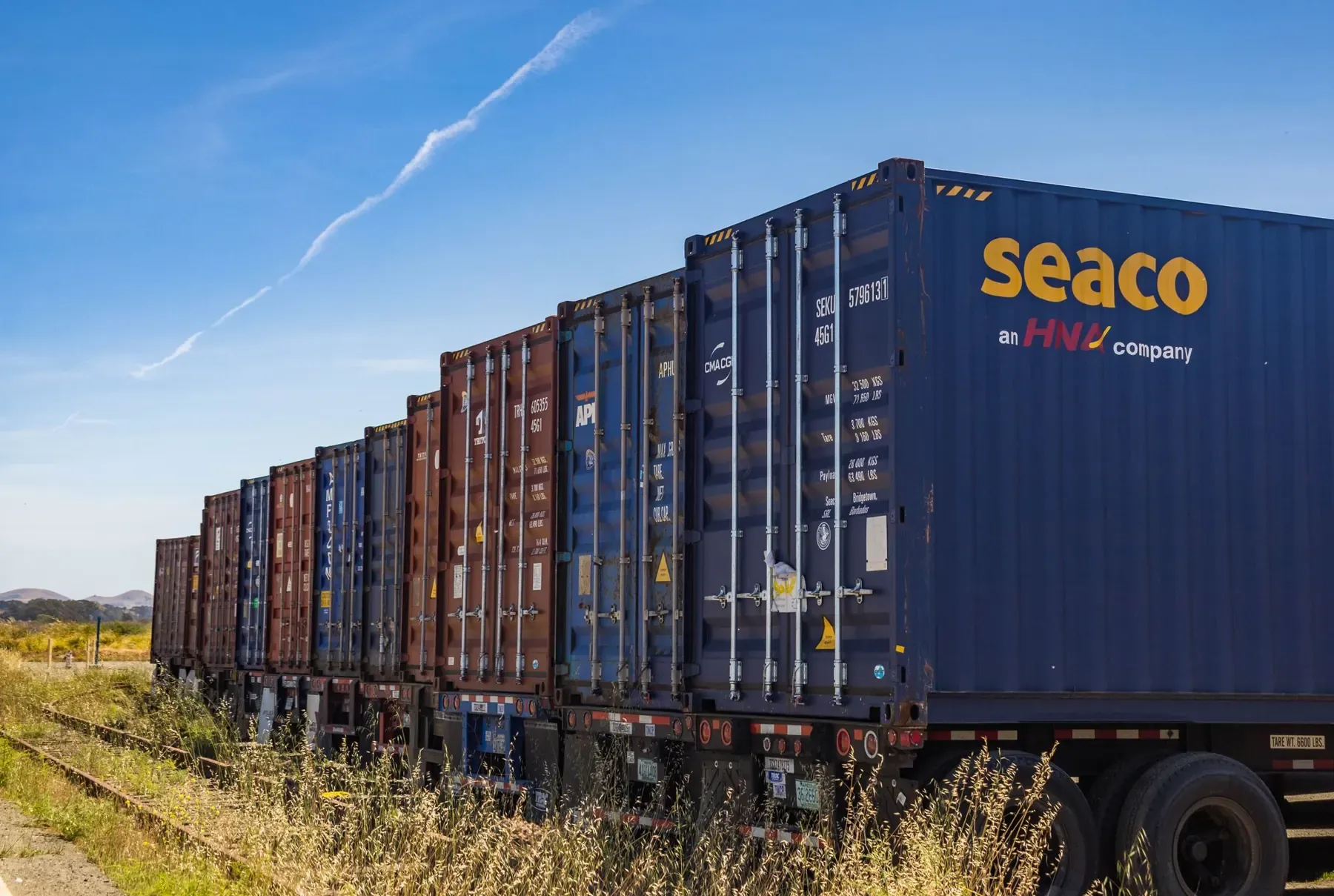

Europe gives you a choice the UK mostly doesn’t: a train. Containers leave Xi’an, Chongqing and Yiwu and reach Duisburg or the Polish border in under four weeks. Add the sea routes into Rotterdam, Antwerp and Hamburg, air freight and couriers, and you have four ways to move the same order, with transit times from a week to seven.
Choosing well comes down to three things: when you need the stock, what the goods weigh and measure, and where in Europe they are going. This guide covers each mode, how it is priced, and the 2026 rule change that moved the maths for parcels.
The options at a glance
| Mode | China to the EU | Priced by | Best for |
|---|---|---|---|
| Sea, full container (FCL) | About 30 to 45 days port to port | Per container | Regular stock, roughly 13 cubic metres and up |
| Sea, shared container (LCL) | About 35 to 50 days port to port | Per cubic metre, minimum 1 | Smaller stock orders that aren’t urgent |
| Rail | About 18 to 25 days to the European terminal | Per container or per cubic metre | Mid-sized orders for central Europe |
| Air freight | About 5 to 10 days door to door | Per chargeable kilogram | Urgent, light or high-value goods |
| Express courier | About 3 to 7 days | Per chargeable kilogram | Samples and small parcels |
Market ranges in October 2026. Since mid-2026 several carriers have moved Asia to Europe services back through the Suez Canal, while others still sail round the Cape of Good Hope. Check the routing when you book.
Sea freight: Rotterdam, Antwerp, Hamburg
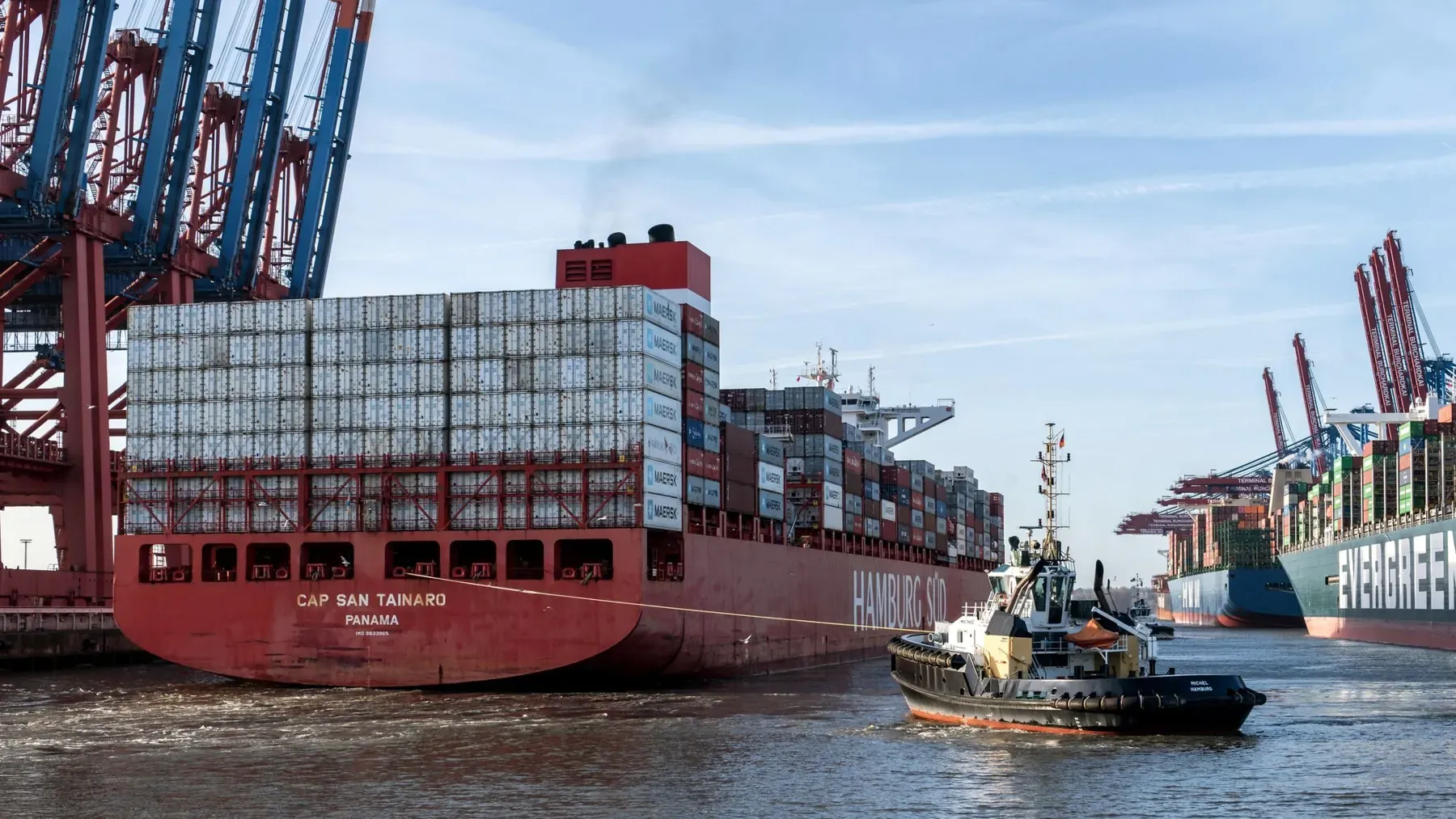
Sea is the cheapest way to move stock per unit. The big North Sea ports take most of it, and goods move on by truck, barge or rail. Pick the port by the total cost and time to your warehouse, not the ocean rate alone: a cheaper rate into Hamburg loses its advantage if the warehouse is in Lyon.
As with the UK, LCL (a shared container) is priced per cubic metre with handling charges at both ends, and somewhere around 13 to 15 cubic metres a full 20ft container often costs the same or less. Ask for both quotes near that size.
Rail: faster than sea, cheaper than air
China to Europe trains run to terminals such as Duisburg in Germany and Małaszewicze on the Polish border, with onward trucking or rail across the EU. Door to door to central Europe, rail often lands in about 3 to 4 weeks.
Rail suits:
- orders that would miss a launch by sea but don’t justify air;
- destinations in Germany, Poland, Czechia and nearby, close to the terminals;
- heavy goods where air freight would be expensive.
Capacity and prices move with demand on the line, so quote rail alongside sea and air for each order.
Air freight and couriers
Air freight takes about 5 to 10 days door to door into hubs such as Frankfurt, Amsterdam, Liège and Paris. It is priced per chargeable kilogram: the higher of actual weight and volumetric weight (length × width × height in cm ÷ 6,000 per carton). Light, bulky goods rarely make sense by air.
Express couriers deliver door to door in 3 to 7 days and usually divide by 5,000, which makes bulky parcels dearer still. Use them for samples and small urgent parcels.
Parcels direct to customers: the 2026 change
If you ship single orders from China straight to EU consumers, the rules changed on 1 July 2026:
- the €150 customs duty exemption ended;
- a temporary flat duty of €3 per item type applies to parcels worth up to €150, charged per tariff classification, not per unit;
- import VAT still applies to every parcel, usually collected at checkout through the Import One-Stop Shop (IOSS);
- the €3 duty is due to run until the EU customs data hub replaces it, expected from 2028.
For many products, bulk shipping to an EU warehouse and fulfilling locally now costs less per unit than parcels from China, and delivers faster. Work it out for your products before you choose. Our EU import guide covers duty, VAT and product rules in full.
Before you book
- Decide where the goods clear customs
The member state of release decides where import VAT falls due. Agree it with your broker.
- Get measured carton data
Carton count, dimensions and weights from the packed goods, not the factory estimate.
- Quote two or three modes
Sea, rail and air side by side, priced to your warehouse, against the date you need stock.
- Check product rules
CE marking, GPSR labels and an EU responsible person must be on the goods before they ship.
- Book after inspection
Book against a passed inspection so a failed batch doesn’t cost you a sailing.
The bottom line
Ship stock by sea to the North Sea port nearest your warehouse, and check whether a full container beats LCL once you pass about 13 cubic metres. Use rail when sea is too slow for central Europe, air for urgent or valuable goods, and couriers for samples. If you sell parcels direct from China, rework the numbers after the July 2026 changes. Bulk to an EU warehouse often wins now.
We consolidate goods from your suppliers in Shenzhen and quote sea, rail and air to your EU warehouse side by side. Send us your packing list and we’ll compare them for you.
Questions we get asked
How long does shipping from China to Europe take?
In October 2026, sea freight takes about 30 to 45 days port to port, rail about 18 to 25 days to hubs such as Duisburg or Małaszewicze, air freight about 5 to 10 days door to door and express courier 3 to 7 days. Add time for collection in China, customs and delivery to your warehouse.
Is rail freight from China to Europe worth it?
For mid-sized orders that need to arrive faster than by sea, often yes. Rail costs more than sea and much less than air. It works best for goods going to Germany, Poland and central Europe, close to the rail terminals.
Which European port should I ship to?
The port nearest your warehouse is usually best once you count the truck from the port. Rotterdam, Antwerp and Hamburg take most container traffic from China. Goods for Ireland can sail direct to Dublin or Cork or come through Rotterdam.
What changed for parcels from China to the EU in 2026?
From 1 July 2026 the EU replaced the €150 duty exemption with a temporary flat duty of €3 per item type on parcels worth up to €150. Import VAT still applies, usually collected at checkout through the Import One-Stop Shop. Bulk shipping to an EU warehouse now beats single parcels for many products.
Where are my goods cleared through customs in the EU?
Where they are released for free circulation, which can be the port of arrival or another member state if they move under transit. That choice affects where import VAT falls due, so decide it with your broker before the goods ship.