Most private label failures start before the first sample. The buyer picks a product from a catalogue, asks for a logo and a quote, and finds out later what the factory did not agree to: the colour tolerance, the box, the paperwork, the minimum order. This guide walks through the choices in order.
Private label, OEM or ODM
The three terms get mixed up. They describe how much of the product is yours:
| What it means | Typical effect | |
|---|---|---|
| Private label | Your brand on a product the factory already makes, often with changes to colour, materials or packaging | Faster, lower MOQs, little or no tooling |
| ODM | The factory’s own design, adapted for you | A middle ground |
| OEM (custom) | The factory builds a product to your design | Slower, usually needs tooling, and the product is yours |
Pick the route by budget, timeline and how different the product must be from what competitors sell.
MOQ: why the range is so wide
In our work, MOQs run from 1 piece to 1,000 pieces, depending on the product category. There is no single figure for “China”. What moves the number up or down:
- How much you change. A logo on a stock item needs less than a new colour, material or mould.
- Tooling. A new mould or die has a cost the factory wants to spread over a larger run.
- Custom printing and packaging. Printed boxes and labels often have their own minimums.
- The factory. Some factories take small orders. Others only run large batches.
Do not accept one MOQ as the answer. Ask each factory for unit prices at three quantities, and ask what changes the MOQ. Our sourcing guide has the quote questions to send.
What to customise
- Logo and label
The lowest-effort change. Agree the print method, position and colour match.
- Colour and finish
Match to Pantone or a physical swatch, and agree the tolerance in writing.
- Materials
Name the material and grade. Agree that no substitute is used without your approval.
- Packaging
Retail box, inserts, outer cartons and shipping marks. Our packaging company Dreams Package, with our in-house design team, handles this.
- Product features
Size, parts or function. This moves you towards ODM or OEM and raises MOQ and lead time.
Samples and the golden sample
Expect more than one round for a customised product. A sensible sequence:
- Factory sample of the existing product, to judge quality.
- Pre-production sample with your changes. Check it against the specification.
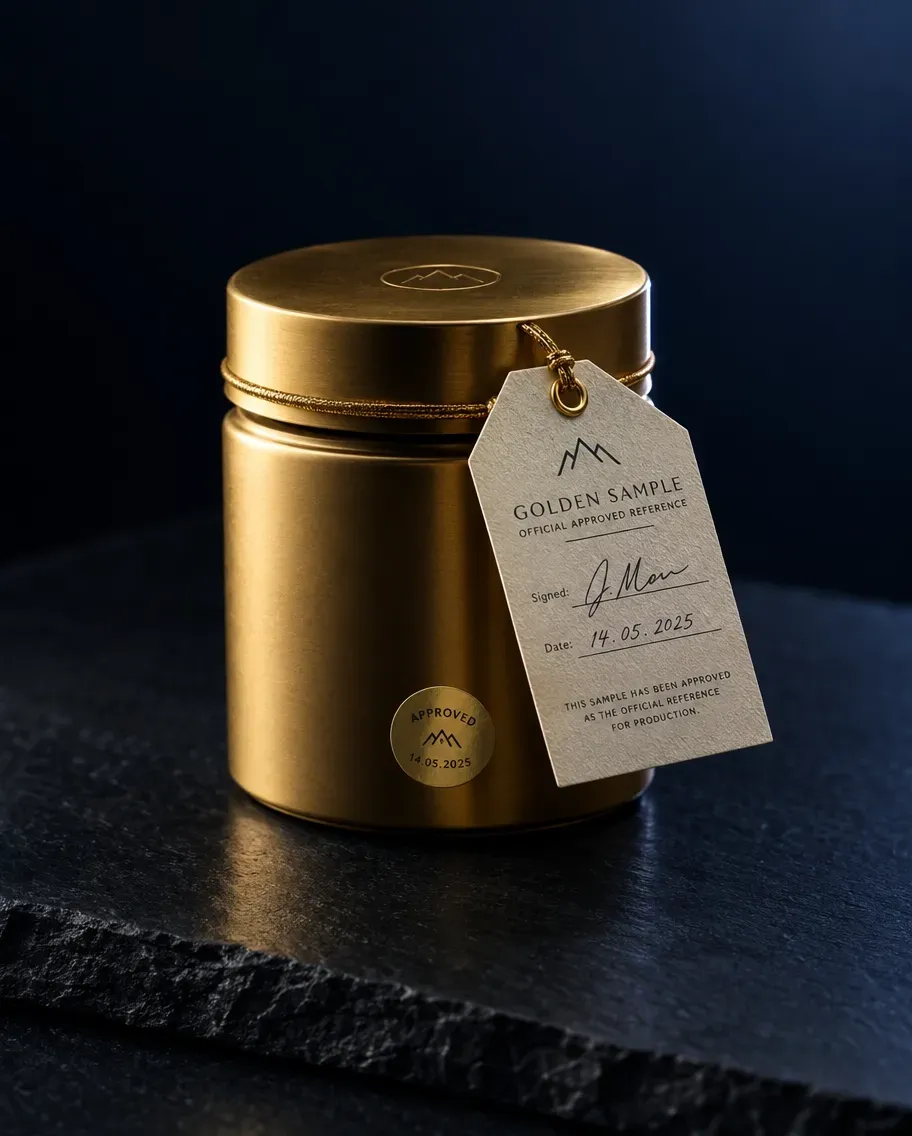
- Golden sample. You and the factory sign the approved sample. It is the standard for production and for the inspector.
Our first-deposit checklist lists what to settle in the purchase order before you pay: the specification, the signed sample, the defect list and the label text.
Packaging and labels
Packaging protects the product and carries your brand, and it also carries legal information. The label may need the importer or manufacturer name and address, the safety marks that apply and the country of origin. Agree the artwork at proof stage, not after printing. We design packaging for free when we produce it, with concepts in 3 to 5 days and 5 revision rounds. See our packaging design service.
Compliance when your brand is on the box
Putting your brand on a product changes your legal position. GOV.UK says an importer that sells a product under its own name takes on the manufacturer’s obligations. Check which of these apply:
- CE and UKCA marking for electrical goods, toys and other regulated products. See our CE and UKCA guide.
- General product safety and an EU responsible person. See our GPSR guide.
- Cosmetics, batteries and electrical goods each have their own rules. See our guides on cosmetics, batteries and EPR and WEEE.
Protect the brand
A trade mark protects your brand name and logo. GOV.UK says registering a trade mark in the UK only protects your brand in the UK and the Isle of Man, costs at least £205 and usually takes around 3 to 4 months if there are no issues. The EU needs its own registration. Apply before you launch, so a copy cannot take the name first. Our trade mark service can help.
Also protect the design. If a copy of your product would hurt you, ask a lawyer in China about an NNN agreement before you send drawings. Our checklist covers this.
Before you scale
- Write the specification
Materials, dimensions, colours, finish, packaging and labels in one document the factory signs.
- Get quotes at three quantities
Compare unit price and MOQ across factories. Ask who owns any tooling.
- Approve a golden sample
Sign it with the factory. Keep one copy yourself.
- Check compliance
Get the declaration, test reports and label content checked for each market.
- Register the trade mark
Apply in each market where you sell.
- Inspect before shipping
Check the finished goods against the golden sample and the specification.
How CFS helps
Private label is a main service for us. We write the specification with you, compare factories on unit cost, tooling and MOQ, manage the sample rounds and check labels and documents. Packaging comes from our group packaging company, Dreams Package, with our in-house design team. Inspection and production management take over from there. See private label and product development, quality control and production management.
Bottom line
Private label starts with a clear specification and a signed golden sample. MOQ depends on the product, so ask for three quantities. Put compliance and your trade mark in place before you scale.
Checked against GOV.UK and the European Commission on 13 November 2026. MOQ figures are from our own work and vary by factory. This guide is general information, not legal advice.
Questions we get asked
What is the MOQ for private label products from China?
It depends on the product category. In our work, MOQs run from 1 piece to 1,000 pieces. What you change moves the number: a logo on a stock item usually needs less than custom printing, new materials or a new mould. Ask the factory for a quote at three quantities.
What is the difference between private label, OEM and ODM?
Private label puts your brand on a product the factory already makes, often with changes to colour, materials or packaging. OEM builds a product to your design. ODM adapts the factory's own design for you, which is a middle ground.
What is a golden sample?
The approved reference sample that you and the factory both sign. Every production unit is then checked against it, and the inspector uses it at final inspection.
Does a UK trade mark cover the EU?
No. GOV.UK says a UK trade mark only protects your brand in the UK and the Isle of Man. For the EU you need a separate registration. Register in each market where you sell, before you scale.