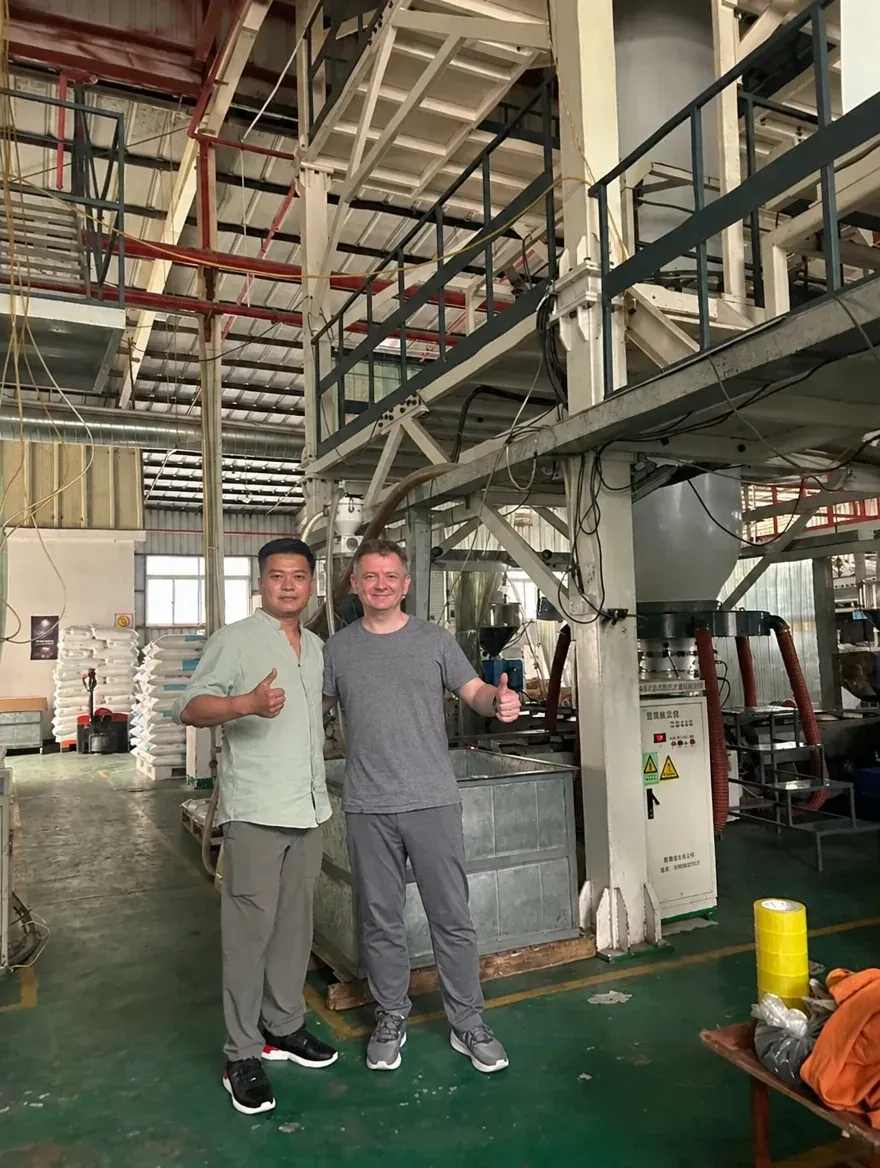

Most first orders from China go wrong in the same few places. The spec was vague, so the factory guessed. The supplier was a trading company that never told you. The sample was perfect and the production run was not. Each mistake costs money, and you only find the last one when the goods arrive.
This guide covers the whole path, from the first brief to goods in your warehouse. It is written for UK and EU buyers placing a real order, and it points to a deeper guide wherever one step needs more room.
What are the steps to source a product from China?
- Write the spec
Describe the product so a stranger could make it and a checker could measure it.
- Find suppliers
Collect five to ten makers from more than one channel.
- Request quotes
Send every supplier the same spec and the same questions.
- Check the business
Confirm who they are, what they make and whether they are a factory.
- Test samples
Judge the product in your hands, then sign off one sample as the standard.
- Agree terms and pay
Fix price, lead time and payment in writing. Hold back the balance.
- Inspect
Check the goods against the signed sample before they leave the factory.
- Ship and clear customs
Choose the Incoterm, book freight and declare the goods correctly.
What do you need before you contact a supplier?
A written spec. Suppliers quote on what you send them. A vague brief gets vague quotes, and the cheapest quote usually belongs to the supplier who assumed the cheapest materials.
| What to write down | Why it matters |
|---|---|
| Product and use | Tells the factory what the product must do, not only how it looks |
| Materials and finish | Material grade is the biggest swing factor in price and quality |
| Size, weight and colour | Give tolerances, for example plus or minus 1 mm, and colour codes |
| Standards the product must meet | CE, UKCA or product safety rules decide what the factory has to test |
| Packaging and labels | Cartons, barcodes and warning text all add cost and lead time |
| Order quantity | Price depends on quantity, so give your first order and your likely repeat |
| Target landed cost | The price at your door, not the price in the quote |
| Delivery place and date | Sets the freight mode and the production deadline |
Add photos, a drawing or a reference sample where you can. A product that exists is easier to quote than a product described in words.
Where do you find suppliers in China?
Use two or three channels, not one. Each finds a different kind of supplier.
| Channel | Good for | Watch out for |
|---|---|---|
| Online marketplaces (Alibaba, Made-in-China, Global Sources) | Wide choice and fast quotes | Many listings are trading companies, and nobody checks the claims |
| 1688.com | Domestic Chinese listings from a wide range of makers | Chinese language only, and set up for domestic buyers |
| Trade fairs (the Canton Fair in Guangzhou runs twice a year) | Meeting makers and handling samples | Travel cost, and exhibitors include trading companies |
| Industry clusters | Cities that specialise: Shenzhen for electronics, Yiwu for small goods, Foshan for furniture and ceramics | You need local knowledge to find the right factory in the right district |
| A sourcing agent | Language, local checks and negotiation | Fees, and the quality of the agent varies |
How do you ask for quotes you can compare?
Send every supplier the same spec and ask for the same things. Quotes that differ in terms cannot be compared by price alone.
| Ask for | Why |
|---|---|
| Unit price at your quantity | The headline number |
| The Incoterm the price is based on | FOB and EXW prices differ by freight and port costs |
| MOQ | Tells you if the supplier fits your order size |
| Lead time | Counted from deposit, not from enquiry |
| Payment terms | Deposit size and when the balance falls due |
| Tooling or mould cost | Often a separate one-off charge |
| Sample cost and time | Whether the sample fee is refunded against the order |
| How long the quote is valid | Material prices move |
Line the quotes up in one sheet. Then ask the two lowest and the one in the middle the same follow-up question. A factory that answers in detail is usually a factory. A reply that dodges technical questions is a flag. Our guide to telling a factory from a trading company lists seven checks.
How do you check a supplier is real?
Check the business before you pay anything. Ask for the business licence, read the Chinese company name on it, and look up the registration number in the government registry. Compare the licence address with the address on the quote. Check the business scope covers making your product.
Our guide on how to verify a Chinese supplier walks through each check. If you cannot read Chinese or cannot visit, our supplier verification service does it for you and sends a report.
How do samples work?
A sample proves the factory can make the product. It does not prove they will make a thousand the same way. Treat samples in two stages.
- The first sample. Order it from your shortlist. Test it against your spec: measure it, use it, break it.
- The signed sample. Once the product is right, agree one sample as the standard. Both sides keep a copy, and the inspection compares the production run against it.
Sign the sample in writing, with the date and the model number, before you pay the deposit. Without a signed sample, a dispute over “the goods do not match” turns into your word against theirs.
How should you pay a Chinese supplier?
Split the payment and tie the balance to inspection. For example, a 30% deposit when the order starts and the 70% balance after the goods pass inspection. The split is a negotiation, not a rule, and some suppliers ask for more upfront on a first order.
- Pay into a company bank account in the name on the business licence. Never pay into a personal account.
- If a supplier asks to change bank details mid-order, confirm by phone on a number you already hold.
- Keep the balance until the inspection report is in your hands.
At CFS, the balance is usually paid only after the inspection passes. You see the factory’s name and the factory’s own price, and we take no commission from the factory.
How do you check quality before the goods ship?
Inspect before you pay the balance, not after the goods land. Once cartons are on a ship, you cannot push back. A pre-shipment inspection checks a random sample of the finished goods against your spec and your signed sample. The standard method is AQL sampling, which sets how many units to check and how many defects you will accept. Our guide to AQL inspection has the sample tables.
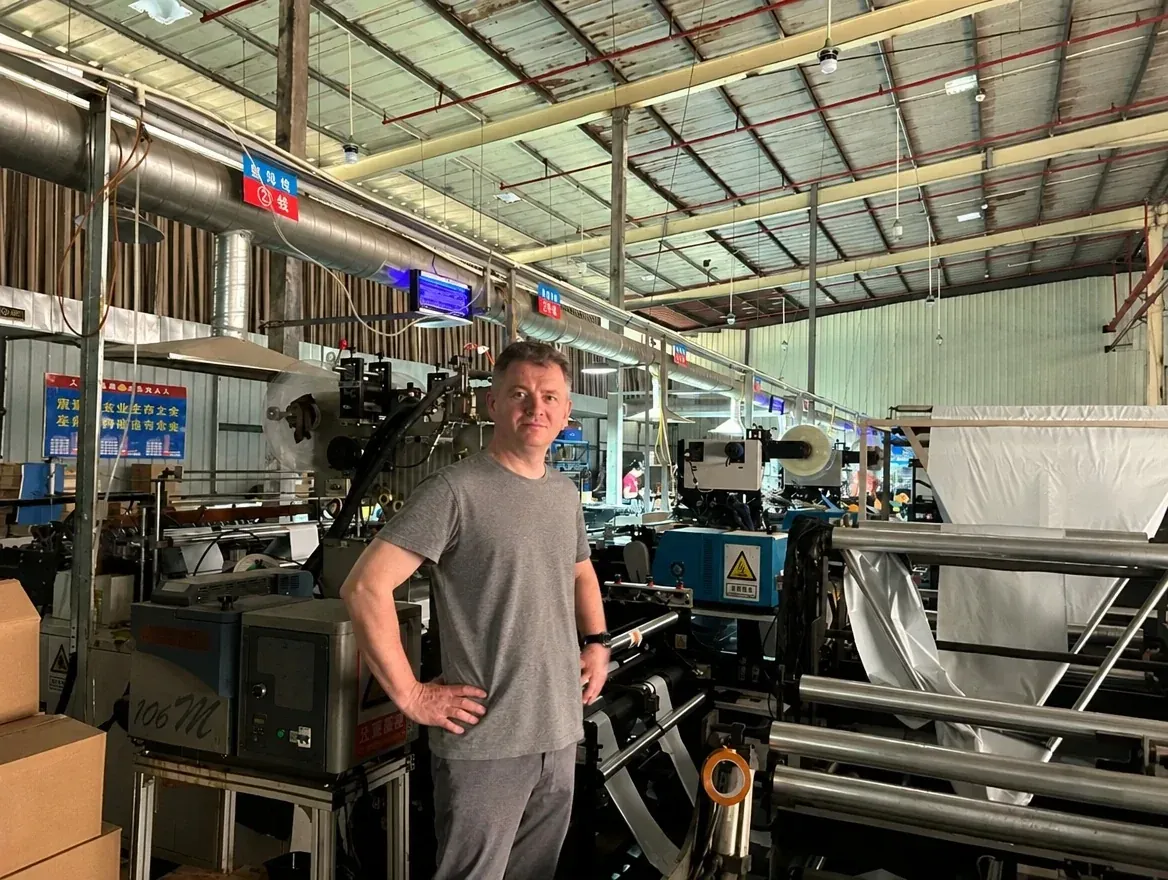
Check at the right moment too. For a large order, an inspection during production catches a bad batch of material early, and a final inspection checks the finished goods. Our quality control service covers both.
How do you ship the goods and clear customs?
Agree the Incoterm before you agree the price. It decides who pays for the truck to the port, the sea freight and the customs clearance, and where your risk starts. FOB is the usual choice for a buyer with a freight forwarder, because the factory delivers the goods to the port and you control the shipping. Our guide to Incoterms compares FOB, EXW and DDP.
At the border, customs charges duty on the customs value, which is the goods plus freight and insurance. Import VAT follows. The rules differ by country, so use the guide for yours: importing from China to the UK, importing to the EU, and the UK duty and VAT calculator guide. Find your commodity code in the UK Trade Tariff or the EU TARIC database before you commit to a price.
What does a first order cost once it lands?
Example, not a quote: 1,000 units, FOB price £3.30 each, sea freight to a UK port, 4% duty and 20% import VAT.
| Line | Calculation | Amount |
|---|---|---|
| Goods, FOB | 1,000 × £3.30 | £3,300.00 |
| Sea freight and insurance | Example figure | £420.00 |
| Customs value | Goods plus freight and insurance | £3,720.00 |
| Import duty | 4% of £3,720.00 | £148.80 |
| Landed cost before VAT | Customs value plus duty | £3,868.80 |
| Cost per unit | £3,868.80 ÷ 1,000 | £3.87 |
| Import VAT | 20% of £3,868.80 | £773.76 |
The quote said £3.30 a unit. The landed cost is £3.87, before broker fees and delivery from the port to your warehouse. VAT-registered businesses usually reclaim the £773.76. The duty rate depends on your commodity code, so check yours before you build a margin on this arithmetic.
When does a sourcing agent make sense?
An agent makes sense when you lack the time, the language or a person on the ground. You pay for local checks, supplier negotiation and someone who can walk into the factory. You do not need one for a repeat order from a supplier you already trust.
Choose an agent on how they get paid, what they show you and what they refuse to hide. Our guide to choosing a sourcing agent lists the criteria and the red flags. Our own fees are on the pricing page.
The bottom line
Sourcing from China is a sequence of checks, and each one is cheap compared with the mistake it prevents. Write the spec, compare quotes on the same terms, check the business, sign a sample, hold back the balance and inspect before the goods ship. Do those six and most first-order disasters stay on other people’s orders.
If you have a product in mind, send us the brief. We will tell you what a realistic first order looks like before you spend anything. Or read about our product sourcing service first.
Questions we get asked
How many suppliers should I contact for a first order?
Contact five to ten with the same written spec, then cut the list to two or three after you compare quotes and check each business. Fewer than five gives you no price comparison. More than ten gives you more replies than you can check properly.
What is MOQ and can I negotiate it?
MOQ is the minimum order quantity a factory will accept. It exists because setting up a production run costs the same for 500 units as for 5,000. A lower MOQ usually means a higher unit price. Factories often relax it for a first order when they already hold the material, or when you accept a stock design.
Is Alibaba a safe way to find Chinese suppliers?
Alibaba is a directory, so it lists suppliers but does not vouch for each one. Many listings come from trading companies, and photos and claims are not checked. Platform payment protection follows its own rules and does not replace checking the supplier or inspecting the goods. Verify the business before you pay.
Should I visit the factory before ordering?
A visit is the strongest check, because you see the machines, the staff and your product being made. It costs time and travel. If you cannot go, a third-party factory audit, a video walk-through or a visit by your sourcing agent gives you most of the same answers.
How long does it take to source a product from China?
It depends on the product. With CFS, a standard product usually takes 3 to 8 days and a custom product 7 to 30 days. Shipping time comes on top, and it depends on whether the goods go by sea, air or rail. Our shipping guide for UK buyers lists transit times for each.